
shower frosted glass panel
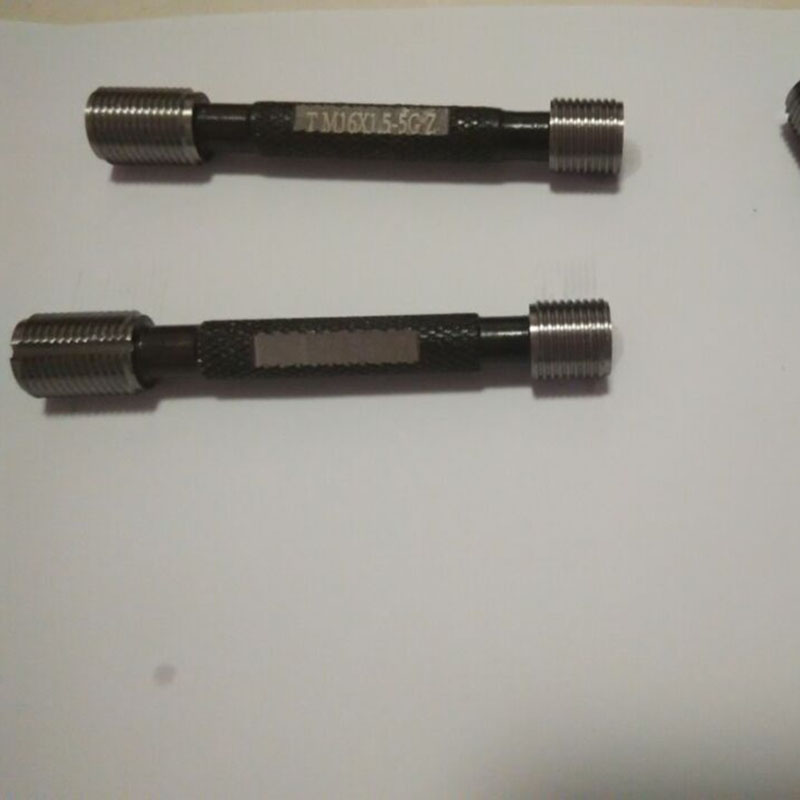
Understanding the Pin Go/No-Go Gauge A Critical Tool in Precision Engineering In the realm of precision engineering and quality control, ensuring that components meet specified tolerances is of paramount importance. One of the most effective tools used for this purpose is the Pin Go/No-Go gauge. This simple yet powerful device serves as a vital instrument in assessing whether an item complies with the designated specifications. What Is a Go/No-Go Gauge? A Go/No-Go gauge is a tool designed to assess whether a part falls within permissible limits. The gauge typically consists of two parts the Go side, which represents the maximum acceptable size, and the No-Go side, which signifies the minimum acceptable size. When testing a component, if it fits on the Go side but does not fit on the No-Go side, it is deemed acceptable. Conversely, if it fails on the Go side or fits onto the No-Go side, it indicates a defect or out-of-tolerance condition. The Role of Pins in Go/No-Go Gauges The Pin Go/No-Go gauge employs pins of various diameters or dimensions, which are representative of the tolerances specified for the part being measured. These pins are meticulously manufactured to ensure their accuracy and reliability. By inserting these pins into the holes or features of a component, engineers can quickly ascertain whether the part meets the defined criteria. For instance, if an engineer is examining a drilled hole, they may use a set of pin gauges with diameters corresponding to the desired specification. A smaller pin will represent the lower tolerance limit (Go), while a larger pin will serve as the upper limit (No-Go). This method allows for efficient testing without the need for elaborate measuring equipment. Advantages of Using Pin Go/No-Go Gauges pin go no go gauge One of the most significant advantages of using Pin Go/No-Go gauges is their simplicity and speed. Operators can quickly gauge a part's acceptability without extensive training or complicated procedures. This efficiency is particularly beneficial in production environments, where time is of the essence. Moreover, the use of pin gauges minimizes the chances of human error. The design ensures that the focus is solely on the dimensions being tested. As long as the proper sized pins are used, the results are clear-cut either the part fits or it does not. Another advantage is the cost-effectiveness of these gauges. Unlike other forms of measurement equipment that can be quite expensive, pin gauges are relatively inexpensive and easy to produce. This makes them accessible even for small-scale manufacturers and workshop operations. Applications of Pin Go/No-Go Gauges Pin Go/No-Go gauges are widely used across various industries including automotive, aerospace, and manufacturing. They are prevalent in quality assurance processes, ensuring that components like shafts, holes, and fittings conform to specified dimensions before assembly. By maintaining stringent quality control, these gauges help to prevent costly errors and ensure the longevity and reliability of the final products. Conclusion In conclusion, the Pin Go/No-Go gauge is an invaluable tool that enhances quality control processes in manufacturing and engineering. Its simplicity, efficiency, and accuracy make it suitable for various applications, serving as a reliable means of ensuring that components meet exacting standards. As industries continue to prioritize quality and precision, the role of such measuring instruments becomes increasingly crucial. Understanding and implementing Pin Go/No-Go gauges can undoubtedly lead to higher-quality outputs and improved operational efficiency.
about
shower frosted glass panel
Using V Blocks An Essential Tool for Precision and Accuracy in Machining In the world of machining and manufacturing, precision is paramount. To achieve the exact specifications required for components, machinists rely on a variety of tools and techniques. One of these indispensable tools is the V block. This simple yet highly effective device serves as a fixture for holding workpieces, ensuring that they are positioned securely and accurately during various machining processes. This article explores the uses, advantages, and best practices associated with V blocks in machining environments. What are V Blocks? V blocks are precision-milled blocks, typically made of metal, that feature a V-shaped groove on one or more sides. This design allows them to hold cylindrical workpieces, such as shafts or rods, firmly in place. V blocks come in various sizes, and they can be purchased individually or as part of a larger set. They are often used in conjunction with clamps and other equipment to create a stable workstation. Applications of V Blocks V blocks are used in a wide range of applications across different sectors of machining and manufacturing. Here are some common uses 1. Holding Cylindrical Workpieces The primary function of a V block is to securely hold cylindrical objects. By resting a workpiece in the V-shaped groove, it prevents movement during processing, allowing for accurate machining. 2. Drilling and Tapping In machining operations where drilling or tapping is required, V blocks provide stability for the workpiece, ensuring that the drill bit or tap remains aligned with the desired entry point. 3. Measuring and Inspection V blocks are also valuable in measurement and inspection processes. For example, when using a caliper or gauge to check the dimensions of a cylindrical part, a V block provides a steady surface that enhances accuracy. 4. Indexing Workpieces For operations that require flipping or rotating a workpiece, V blocks can be used to index positions, allowing for repeatable set-ups without the need for re-alignment. Advantages of Using V Blocks The benefits of utilizing V blocks in machining operations extend beyond just their ability to hold components. Here are some key advantages using v blocks 1. Improved Accuracy By securely holding workpieces, V blocks reduce the likelihood of errors related to movement during machining. This contributes to higher precision and quality in the final product. 2. Ease of Use V blocks are simple tools that can be easily positioned and adjusted. Their design promotes efficiency, allowing machinists to focus on the task at hand rather than wrestling with poorly secured workpieces. 3. Versatile Applications V blocks can be used with a variety of machines, including drill presses, lathes, and milling machines. Their versatility makes them a valuable addition to any workshop. 4. Cost-Effective Solution Compared to other holding fixtures, V blocks are relatively inexpensive. Their cost-effectiveness does not compromise performance, making them a wise investment for any machining operation. Best Practices for Using V Blocks To maximize the effectiveness of V blocks, consider these best practices 1. Choose the Right Size Select a V block that fits your workpiece size. Using an appropriately sized block ensures optimal stability and support. 2. Secure the Workpiece Always use appropriate clamps or straps to secure the workpiece in place. This prevents any movement during machining, safeguarding against inaccuracies. 3. Regular Maintenance Keep V blocks clean and free of debris. Regularly check for wear and tear to ensure they continue to perform effectively. 4. Use With Other Tools Combine V blocks with other holding fixtures, like vises and jigs, for more complex machining tasks. This enhances stability and accuracy further. In conclusion, V blocks are a fundamental component in the toolset of any machinist. Their ability to hold cylindrical workpieces securely while providing the precision necessary for high-quality machining makes them invaluable. By understanding their applications and adhering to best practices, machinists can significantly enhance their workflow and achieve superior results in their machining tasks.
-

High quality industrial productsagement

High quality industrial products
View Details -

Meet the diverse needs of customers

Meet the diverse needs of customers
View Details -

Strict quality control

Strict quality control
View Details -

Top raw materials

Top raw materials
View Details -

Trusted supplier

Trusted supplier
View Details
Our application


news and information
Water Meter Shutdown Valve Installation and Maintenance Guide for Homeowners
Understanding Water Meter Shut-Off Valves Importance, Functionality, and Maintenance In residential
Valves Available for Purchase Now at Competitive Prices
Exploring the Market for Valves for Sale A Comprehensive Guide In industrial applications across var

using a thread gauge
Using a Thread Gauge A Comprehensive Guide Threads are an essential component in countless mechanica
 English